

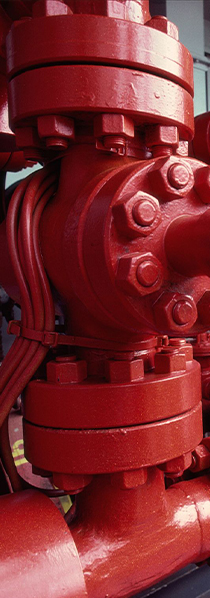
In the oil & gas industry, material selection for downhole tools is a critical engineering decision that directly impacts tool life, operational safety, and total well cost. Harsh environments—characterized by high temperature, high pressure (HTHP), corrosive fluids, and mechanical loads—demand materials that go beyond standard industrial performance.
This guide provides a concise, field-oriented comparison of commonly used materials for ESP cable protectors, completion tools, and downhole accessories, with a focus on temperature capability, corrosion resistance, and mechanical performance.
Downhole Environment: Key Material Challenges
Typical downhole conditions include:
- Temperature:80°C to 200°C+
- Pressure:Up to 10,000 psi or higher
- Fluids:Hydrocarbons, brine, CO₂, H₂S, acids (e.g., HCl during stimulation)
- Mechanical Stress:Vibration, impact, long-term compression, and wear
These factors often eliminate general-purpose materials and require engineered polymers or high-performance metals.
Comparison of Common Downhole Materials
The table below summarizes widely used materials in downhole tools, including PEEK, Nylon (PA), UHMWPE, POM , and Cast Iron.
| Material | Temperature Limit | Corrosion Resistance | Mechanical Properties | Advantages | Limitations |
| PEEK | Up to 250°C | Excellent (acid, brine, hydrocarbons) | High strength, resistance | for HTHP, long-term stability, minimal water absorption | High cost (5–15× vs metals in parts) |
| Nylon (PA6/PA66) | ~80–100°C | Moderate (poor in acids, hydrolysis risk) | Medium strength, absorbs water, prone to creep | Low cost, easy machining | Swelling, strength loss, not for critical downhole use |
| UHMWPE | ~80°C | Excellent (non-reactive, chemical resistant) | Very high wear resistance, low friction, low stiffness | Ideal for abrasion protection | Low temperature limit, not load-bearing |
| POM | ~100–120°C | Good (better than nylon, not acid-proof) | Good stiffness, low moisture absorption | Good dimensional stability, moderate cost | Limited high-temp capability |
| Cast Iron | >300°C | Poor (corrosion-prone without coating) | Very high strength, brittle, heavy | Low material cost, high compressive strength | Corrosion, weight, not suitable for dynamic protection |
Key Insights for Material Selection
- Temperature Drives Material Choice
For high-temperature wells (>120°C):
- PEEKis often the only reliable polymer
- Nylon and UHMWPE will soften, creep, or degrade
- Corrosion Resistance Is Application-Specific
- Acidizing environments : require PEEK or corrosion-resistant alloys
- Water/brine exposure: avoid nylon due to hydrolysis and swelling
- Mechanical Stability Matters More Than Hardness
Many failures are not due to low strength, but due to:
- Creep deformation (plastics under load over time)
- Loss of clamping force (ESP protectors loosening)
- Dimensional instability (water absorption)
Application Example: ESP Cable Protectors
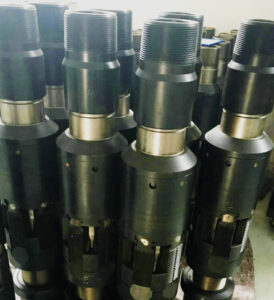

For ESP cable protectors, the material must:
- Maintain clamping force over time
- Resist abrasion against casing/tubing
- Withstand temperature and chemical exposure
Recommended Material Strategy:
- Premium wells (HTHP / corrosive):
→ PEEK (full or insert design) - Moderate wells:
→ POM or UHMWPE (wear components only) - Low-cost / temporary applications:
→ Nylon (non-critical use only) - Structural components:
→ Often metal (carbon steel or stainless) + polymer inserts
Cost vs Performance: A Practical Perspective
While PEEK is significantly more expensive than materials like cast iron or nylon:
- Raw material cost:~15–40× higher than cast iron (by weight)
- Actual part cost:typically, 5–15× higher
However, in downhole operations:
A single tool failure can lead to workover costs, deferred production, or equipment damage, far exceeding material savings.
👉 Therefore, material selection should be based on lifecycle cost, not initial price.
Conclusion
Selecting the right material for downhole tools requires balancing:
- Temperature capability
- Chemical resistance
- Mechanical stability over time
PEEK remains the benchmark for critical applications, while materials like UHMWPE and POM serve well in specific roles. Nylon, despite its low cost, is generally unsuitable for long-term downhole use due to water absorption and limited thermal performance.