

When you work in the oil and gas industry, you already know this: corrosion isn’t just a maintenance issue—it’s a direct threat to safety, uptime, and profitability. Whether you’re dealing with upstream flowlines or long-distance transmission pipelines, selecting the right corrosion protection system is not optional—it’s engineering-critical.
So how do you ensure your pipeline survives harsh environments for 20–30 years? It starts with understanding materials, coatings, and specification levels like PSL2—and how they all fit together.
Why Corrosion Protection Is Critical in Oil & Gas Pipelines
Economic Impact of Corrosion Failures
Corrosion costs the global oil and gas industry billions every year. A single pipeline failure can shut down production, trigger regulatory penalties, and require costly remediation.
Think about it this way: would you leave a high-pressure system unprotected in a chemically aggressive environment? Of course not.
Safety and Environmental Risks
Corrosion-related failures can lead to:
- Hydrocarbon leaks
- Explosions
- Environmental contamination
That’s why standards bodies like NACE International emphasize proactive corrosion control.
Understanding Pipe Types in Oil & Gas Applications
Seamless Steel Pipe vs ERW Pipe
- Seamless steel pipe: Higher pressure tolerance, no weld seam weakness
- ERW (Electric Resistance Welded): Cost-effective, widely used in midstream
For critical applications, especially high-pressure lines, seamless pipes are often paired with PSL2 requirements.
Hot Rolled vs Cold Drawn Pipes
Hot rolled pipes are commonly used for pipelines due to:
- Lower cost
- Adequate mechanical properties
Cold drawn pipes offer tighter tolerances but are less common in large-diameter pipelines.
API Standards Governing Pipeline Materials
API 5L – Line Pipe Specification
This is the backbone of pipeline material standards. It defines:
- Chemical composition
- Mechanical properties
- Testing requirements
PSL1 vs PSL2 – Key Differences
You can think of PSL levels as quality tiers:
| Feature | PSL1 | PSL2 |
| Testing | Basic | Enhanced |
| Chemical control | Standard | Strict |
| NDT | Limited | Mandatory |
Overview of External Corrosion Protection Systems
You typically rely on two main strategies:
- Coatings (primary barrier)
- Cathodic protection (secondary defense)
The coating prevents exposure; cathodic protection handles defects.
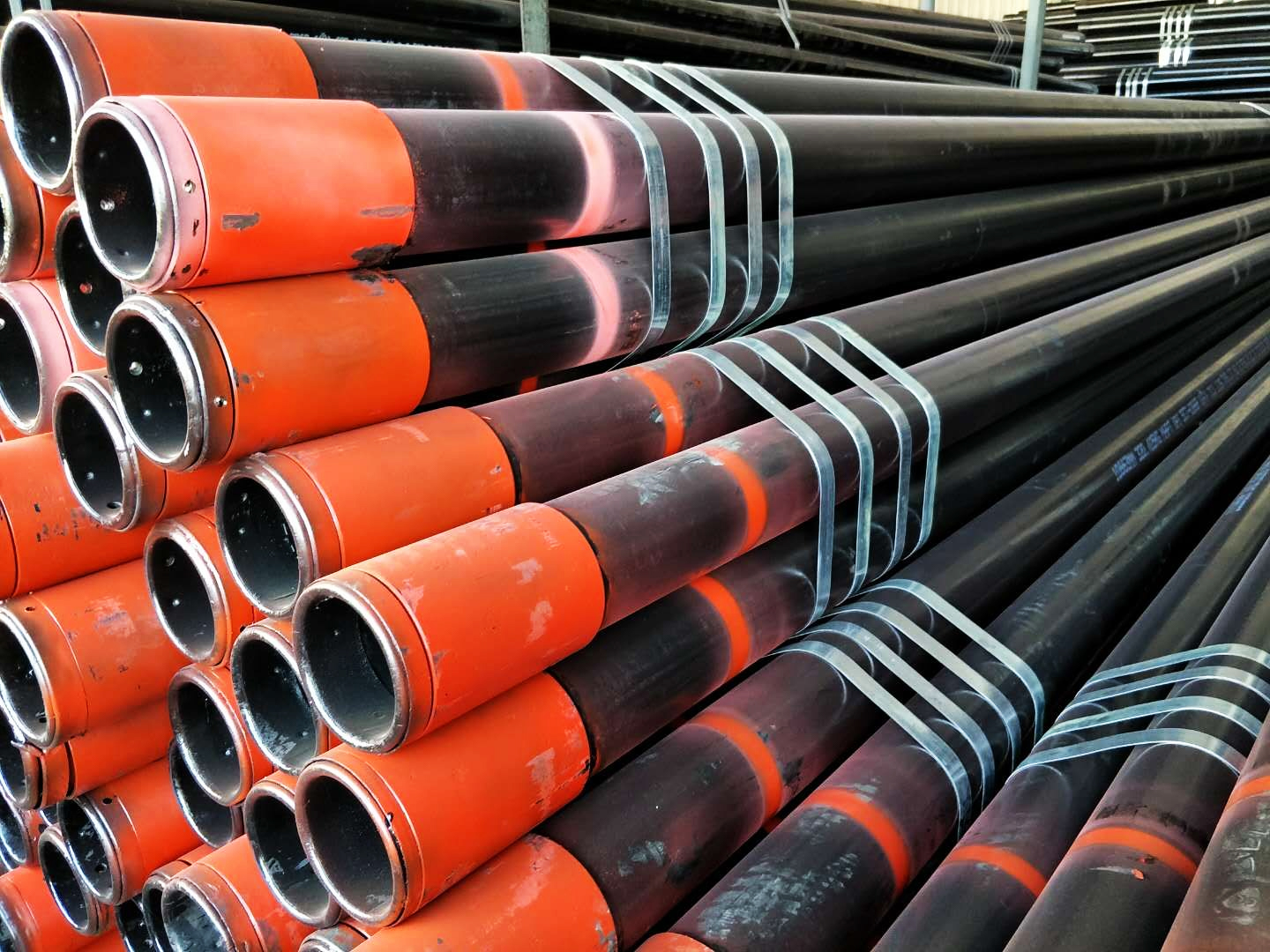
3LPE Coating System (Three-Layer Polyethylene)
For seamless hot rolled pipes, 3LPE is one of the most widely specified systems.
Structure
- FBE (Fusion Bonded Epoxy)
- Adhesive layer
- Polyethylene outer layer
Standards
- DIN 30670
- ISO 21809
Performance
- corrosion resistance
- Strong mechanical protection
- Long service life (>25 years)
Other Common Pipeline Anti-Corrosion Coatings
3LPP (Three-Layer Polypropylene)
If your pipeline operates at higher temperatures (above 110°C), 3LPP outperforms 3LPE due to better thermal stability.
FBE (Fusion Bonded Epoxy)
A single-layer system widely used for:
- Smaller pipelines
- Internal coatings
Standard: AWWA C213
Coal Tar Enamel (CTE)
Once popular, now largely phased out due to:
- Environmental concerns
- Lower performance vs modern systems
Liquid Epoxy Coatings
Used mainly for:
- Field joint coatings
- Repair applications
Internal Corrosion Protection Methods
External coatings aren’t enough—you also need to consider internal corrosion.
Internal Epoxy Lining
Reduces friction and corrosion in flowlines.
Corrosion Inhibitors
Injected chemicals that protect pipe walls.
Spec Levels and Material Grades in Pipeline Projects
API 5L Grades
Common grades include:
- X42
- X52
- X65
- X70
Higher grades = higher strength, but also stricter requirements.
Sour Service Requirements
Pipelines exposed to H₂S must comply with:
- NACE MR0175
Key Standards for Corrosion Protection Systems
ISO 21809
Defines coating requirements for oil and gas pipelines.
NACE SP0169
Covers cathodic protection design and monitoring.
How to Select the Right Corrosion Protection System
Ask yourself:
- What’s the operating temperature?
- Is the environment offshore or buried?
- What’s the design life?
There’s no one-size-fits-all solution.
Inspection and Quality Control
You don’t just apply coatings—you verify them.
Common Tests:
- Holiday detection
- Adhesion testing
- Coating thickness measurement
Common Failures and How to Avoid Them
Most failures come from:
- Poor surface preparation
- Mechanical damage during installation
- Incorrect coating selection
Future Trends in Pipeline Corrosion Protection
You’re starting to see:
- Smart coatings with sensors
- Real-time corrosion monitoring
- Advanced polymers
Conclusion
If you’re specifying pipelines in the oil and gas sector, you can’t treat corrosion protection as an afterthought. From API 5L PSL2 material selection to 3LPE or 3LPP coating systems, every decision impacts lifecycle performance.
Get it right, and your pipeline lasts decades. Get it wrong, and you’re looking at failures, downtime, and major financial loss.
FAQs
- What is the difference between 3LPE and 3LPP?
3LPP performs better at high temperatures, while 3LPE is more cost-effective for standard conditions.
- Is PSL2 mandatory for all pipelines?
No, but it is required for critical or sour service applications.
- What standard governs pipeline coatings?
ISO 21809 is the most widely used.
- Can FBE be used alone?
Yes, but it offers less mechanical protection than multilayer systems.
- How long does 3LPE coating last?
Typically 20–30 years, depending on environment and installation quality.