


Tube fittings are small components, but in the oil and gas industry, they are directly connected to system safety, pressure integrity, leakage control, and long-term reliability. For buyers in Europe, North America, and the Middle East, a tube fitting is not only judged by price or appearance. More importantly, it must meet the required standards, material specifications, pressure ratings, testing requirements, and documentation rules.
For oilfield applications such as chemical injection lines, hydraulic control lines, wellhead panels, instrumentation systems, gas lift systems, sampling systems, and offshore skids, tube fittings are usually required to work under high pressure, vibration, corrosion, and temperature changes. Therefore, understanding the standard and certification requirements of tube fittings is essential before purchasing or selecting suppliers.
What Are Tube Fittings?
Tube fittings are mechanical connectors used to connect tubing without welding. In oil and gas projects, the most common type is the double ferrule tube fitting, also known as a compression tube fitting. It normally includes four main parts: body, front ferrule, back ferrule, and nut.
When the nut is tightened, the ferrules grip the tube surface and create a seal. A good tube fitting should provide strong tube holding force, reliable sealing performance, and resistance to vibration and pressure cycling.
Compared with welded connections, tube fittings are easier to install, replace, inspect, and maintain. This is why they are widely used in oilfield instrumentation, chemical injection systems, pressure control systems, and offshore hydraulic systems.
Common Core Models of Tube Fittings
For the oil and gas market, the following tube fitting models are the most commonly used:
- Male Connector
A male connector connects tubing to female threaded ports. Common thread types include NPT, BSPT, BSPP, SAE, and metric threads. In oilfield applications, NPT male connectors are especially common in North America
Typical sizes include:
| Tube OD | Thread Size |
| 1/4 in | 1/4 in NPT |
| 3/8 in | 1/4 in or 3/8 in NPT |
| 1/2 in | 1/2 in NPT |
| 6 mm | M10 / M12 / BSPP |
| 10 mm | M14 / M16 |
Male connectors are widely used in chemical injection panels, pressure gauges, valves, manifolds, and wellhead control systems.
- Female Connector
A female connector connects tubing to male threaded components. It is used where the equipment outlet has a male thread. In oilfield systems, female connectors are often used with pressure instruments, sampling ports, and hydraulic components.
- Union
A union connects two tubes of the same size. It is one of the most basic tube fittings and is commonly used in straight-line connections. For example, a 1/4 in tube union can connect two sections of 1/4 in tubing in a chemical injection line.
- Reducing Union
A reducing union connects two tubes with different outside diameters. For example, 3/8 in x 1/4 in reducing unions are commonly used when the system needs to transition between different tube sizes.
- Elbow Union
An elbow union connects two tubes at a 90-degree angle. It is used where the piping layout has limited space or where the tubing must change direction.
- Tee Union
A tee union connects three tubes. It is used to split or combine flow paths. In instrumentation and injection systems, tee fittings are often used for branch lines, sampling lines, or bypass arrangements.
- Bulkhead Union
A bulkhead union allows tubing to pass through a panel or wall. It is commonly used in control panels, offshore skids, and cabinet-mounted systems.
- Cap and Plug
Caps and plugs are used to seal tube ends or fitting ports. They are important for pressure testing, system maintenance, and temporary sealing during transportation or installation.
Common Materials Used for Oilfield Tube Fittings
Material selection is one of the most important factors in tube fitting performance. Oil and gas environments may include high pressure, saltwater, H₂S, CO₂, chloride corrosion, high temperature, and chemical exposure. Therefore, the material must be selected according to the actual working condition.
- 316 Stainless Steel
316 stainless steel is the most common material for tube fittings. It offers good corrosion resistance, mechanical strength, and cost efficiency. It is widely used in instrumentation systems, hydraulic lines, and general oilfield applications.
However, for highly corrosive environments, especially offshore or sour service conditions, 316 stainless steel may not always be enough.
- 316L Stainless Steel
316L has lower carbon content than standard 316 stainless steel. It provides better resistance to intergranular corrosion after welding or high-temperature exposure. For projects requiring better corrosion control, 316L is often preferred.
- Duplex Stainless Steel 2205
Duplex 2205 provides higher strength and better chloride corrosion resistance than 316 stainless steel. It is widely used in offshore platforms, subsea systems, seawater service, and chemical injection systems.
For many oil and gas buyers, 2205 is a practical upgrade when 316 stainless steel is not strong enough for corrosion or pressure requirements.
- Super Duplex 2507
Super Duplex 2507 is used for more severe oilfield environments. It has excellent resistance to chloride stress corrosion cracking, pitting, and crevice corrosion. It is commonly specified for offshore, subsea, high-chloride, and sour service applications.
For chemical injection fittings required to withstand high pressure and corrosive media, 2507 Super Duplex is often a preferred material.
- Inconel 625
Inconel 625 is a nickel-based alloy used in extremely corrosive and high-temperature environments. It performs well in sour gas, seawater, acid gas, and aggressive chemical service. It is much more expensive than stainless steel or duplex materials, but it is often necessary for critical applications.
- Monel 400
Monel 400 is used in seawater and certain chemical environments. It has good resistance to marine corrosion and is selected for some offshore or special chemical service projects.
- Titanium Alloy
Titanium alloy tube fittings are used in special oilfield applications where lightweight, high corrosion resistance, and special chemical compatibility are required. Titanium is more difficult to machine, so it requires strong CNC capability and strict process control.
Pressure Ratings of Tube Fittings
Pressure rating is another key selection point. Tube fittings must be suitable for the working pressure of the system. The final pressure rating depends on several factors, including fitting design, tube material, tube wall thickness, temperature, and installation quality.
Common pressure levels include:
| Pressure Level | Typical Application |
| 3,000 psi | General instrumentation systems |
| 5,000 psi | Chemical injection, hydraulic control lines |
| 6,000 psi | High-pressure oilfield panels |
| 10,000 psi | Severe-service chemical injection and wellhead systems |
| 15,000 psi | Special high-pressure oilfield applications |
| 20,000 psi | Ultra-high-pressure systems, special engineered projects |
For standard instrumentation tube fittings, 3,000 psi to 6,000 psi is common. For oilfield chemical injection systems and wellhead applications, 10,000 psi fittings are frequently required. In some special projects, fittings may need to meet 15,000 psi or even 20,000 psi pressure requirements.
It is important to note that pressure rating should not be judged by the fitting body alone. The tubing must also match the required pressure. For example, a 10,000 psi fitting used with thin-wall tubing may not achieve the expected system pressure rating.
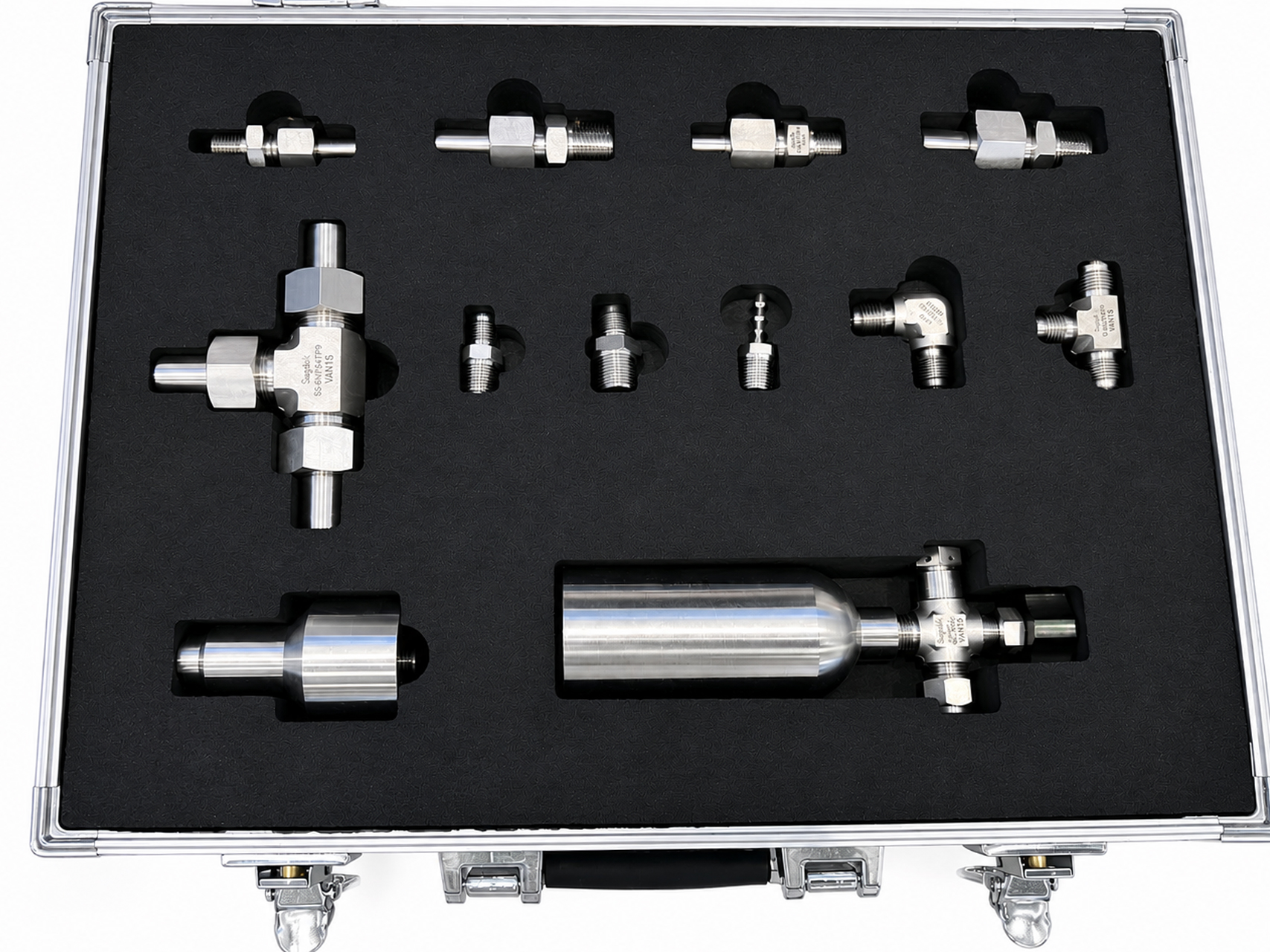
Key Standards for Tube Fittings
European and American buyers often require tube fittings to meet internationally recognized standards. The most relevant standards include the following:
ASTM Material Standards
ASTM standards define the chemical composition, mechanical properties, and material requirements. Common material standards include:
- ASTM A276 for stainless steel bars
- ASTM A479 for stainless steel bars and shapes
- ASTM A182 for forged stainless steel and alloy fittings
- ASTM B564 for nickel alloy forgings
- ASTM B348 for titanium and titanium alloy bars
For oilfield projects, the supplier should provide material certificates showing compliance with the required ASTM grade.
ASME Standards
ASME standards are commonly used for pressure equipment, piping design, and dimensional requirements. Although tube fittings are not always covered by one single ASME standard, oil and gas buyers often refer to ASME rules for pressure piping, threaded connections, and system compatibility.
Common related standards include:
- ASME B1.20.1 for NPT threads
- ASME B31.3 for process piping
- ASME B16 series for related piping components
ISO Standards
ISO standards are widely accepted in international oil and gas projects. For tube fittings and pressure systems, ISO-related requirements may include material quality, testing, corrosion resistance, and sour service compatibility.
For sour service, buyers often refer to:
- ISO 15156 / NACE MR0175 for materials used in H₂S-containing environments
This is especially important when tube fittings are used in sour gas fields, chemical injection systems, and downhole-related control lines.
NACE Requirements
NACE MR0175 / ISO 15156 is one of the most important standards for oil and gas materials used in sour service. If the system contains H₂S, the material must be evaluated for resistance to sulfide stress cracking and other corrosion risks.
For stainless steel, duplex, super duplex, and nickel alloy fittings, NACE compliance must be confirmed according to the actual material grade, hardness, heat treatment, and service environment.
EN 10204 Material Certification
For European projects, EN 10204 certification is often required. The most common certificate type is EN 10204 3.1 material certificate. It provides traceability of the material, including heat number, chemical composition, mechanical properties, and inspection results.
For more critical projects, buyers may request EN 10204 3.2 certification, which involves third-party inspection or independent verification.
Common Testing Requirements
A qualified tube fitting supplier should not only provide materials but also confirm performance through testing. Common tests include:
- Hydrostatic Pressure Test
Hydrostatic testing checks the fitting’s ability to withstand pressure without leakage or failure. For high-pressure oilfield fittings, hydrostatic testing is a basic requirement.
- Pneumatic Leak Test
Pneumatic testing is used to check sealing performance using gas. It is more sensitive than hydrostatic testing and is useful for detecting small leaks.
- Burst Test
Burst testing verifies the maximum pressure the fitting can withstand before failure. This is important for validating the design safety margin.
- Pull-Out Test
Pull-out testing checks whether the ferrules can grip the tube firmly under axial load. This is especially important for vibration, pressure cycling, and field installation reliability.
- Vibration Test
Oilfield systems often experience vibration from pumps, compressors, drilling equipment, and flow movement. Vibration testing helps confirm whether the fitting can maintain sealing performance under dynamic conditions.
- Salt Spray Test
For offshore and marine applications, salt spray testing is used to evaluate corrosion resistance. This is especially relevant for stainless steel, duplex, and coated components.
- PMI Test
Positive Material Identification confirms the actual alloy composition. PMI is widely required for stainless steel, duplex, super duplex, nickel alloy, and titanium fittings.
Required Documents for Oil and Gas Buyers
European and American buyers usually require complete documentation before approval. A professional tube fitting supplier should be able to provide:
- Technical data sheet
- Material test certificate
- Pressure test report
- PMI report
- Dimensional inspection report
- Certificate of conformity
- NACE compliance statement, if required
- ISO 9001 certificate
- Packing list and traceability records
- Installation instructions
- Torque or make-up guidance
For critical oilfield applications, traceability is very important. Each batch should be traceable to the raw material heat number, production batch, inspection record, and final shipment.
How to Select the Right Tube Fitting Supplier
When selecting tube fittings for oil and gas applications, buyers should not only compare unit prices. A reliable supplier should have strong material control, CNC machining capability, pressure testing equipment, quality inspection systems, and engineering support.
For high-pressure or corrosive applications, the supplier should clearly confirm:
- Correct material grade
- Applicable pressure rating
- Tube size and wall thickness compatibility
- Thread standard
- Testing method
- Certificate availability
- Lead time
- Traceability
- Packaging and marking requirements
A low-cost fitting without proper certification may create serious risks, including leakage, shutdown, equipment damage, and safety incidents.
Conclusion
Common tube fitting models include male connectors, female connectors, unions, reducing unions, elbows, tees, bulkhead unions, caps, and plugs. Common materials include 316 stainless steel, 316L stainless steel, Duplex 2205, Super Duplex 2507, Inconel 625, Monel 400, and titanium alloy. Pressure ratings may range from 3,000 psi to 20,000 psi depending on the application.
For oilfield applications such as chemical injection, hydraulic control, instrumentation, and offshore systems, the right tube fitting must be selected according to pressure, temperature, corrosion environment, tubing specification, and project standard. A qualified supplier should be able to provide not only products, but also testing reports, material certificates, technical support, and full traceability.